Musculoskeletal Tumour Surgery in Multan
Musculoskeletal tumour surgery in Multan. This page explains how a lump or an abnormal area on an X-ray is investigated, why the biopsy matters as much as the operation, and what limb-salvage surgery involves.
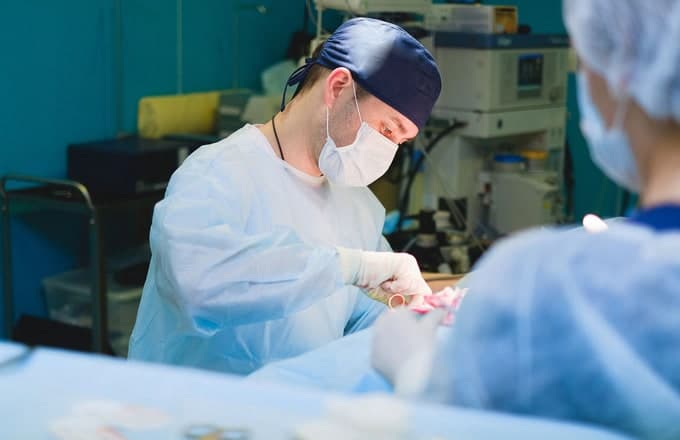
Musculoskeletal Tumour Surgery: what it involves
A tumour in bone or soft tissue is not the same thing as cancer. Most lesions found on an X-ray are benign: osteochondromas, enchondromas, simple bone cysts and fibrous defects are common, many are discovered by accident while investigating an unrelated injury, and a good number need nothing more than observation. A smaller number are malignant, and a further group are secondary deposits from a cancer that started elsewhere in the body. The purpose of the assessment is to establish which of these you are dealing with before anything irreversible is done.
Diagnosis follows a sequence, and the sequence matters. Plain X-rays, then MRI or CT to define the extent of the lesion and its relationship to nerves and blood vessels, then staging to look for spread, and only then a biopsy. A biopsy placed badly, or taken before the imaging, can contaminate tissue planes that a later limb-salvage operation depends on, and can turn a limb that could have been saved into one that cannot. For that reason the biopsy should be planned by the surgeon who would carry out the definitive operation.
Treatment is rarely surgery alone. Benign lesions may be watched, curetted and grafted, or excised. Malignant bone and soft tissue tumours are managed alongside oncology, with chemotherapy or radiotherapy before or after surgery depending on the tumour type, and the operation itself aims for wide clearance with reconstruction of the resulting defect using an endoprosthesis, bone graft or internal fixation. Where bone weakened by a tumour has already broken, stabilising that pathological fracture restores comfort and function even while the underlying disease is treated by other means.
This page gives general information about musculoskeletal tumour surgery and is not a diagnosis or a treatment plan. What is right for you depends on your own examination, imaging and medical history. Please discuss your case at a consultation.
Consultation details
- Consultation
- Rs. 2,000
- Timings
- Mon to Sat, 2:00 to 7:00 PMFriday, 3:30 to 8:30 PM
- Clinic
- Fatima Medical Centre, Chowk Rasheedabad, Multan
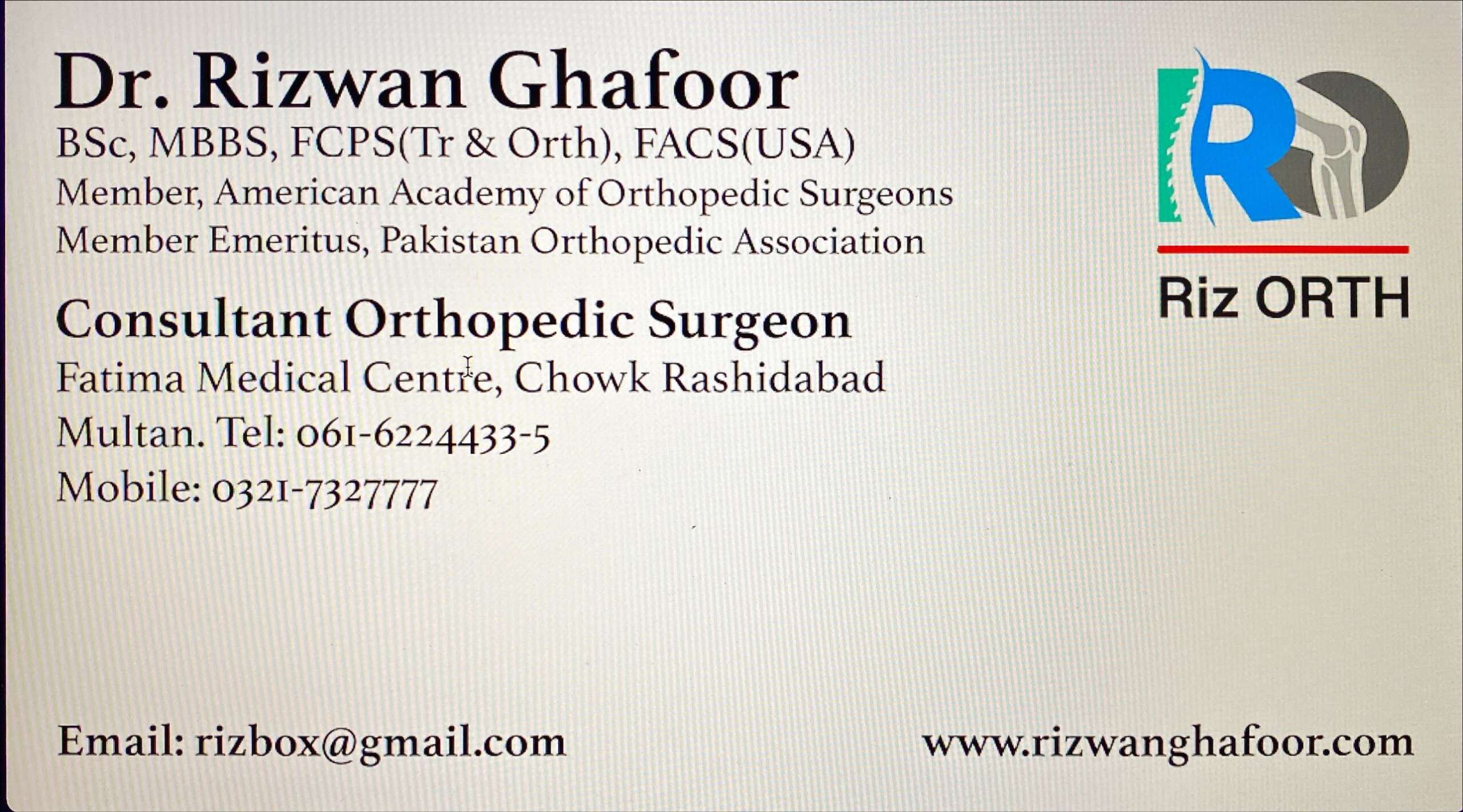
Treated by Dr. Rizwan Ghafoor, BSc, MBBS, MRCPS(Glasg), FCPS (Tr & Orth), FACS(USA).
- Member: AAOS, USA
- Member: Pakistan Orthopaedic Association
- Member: Royal College of Physicians and Surgeons of Glasgow
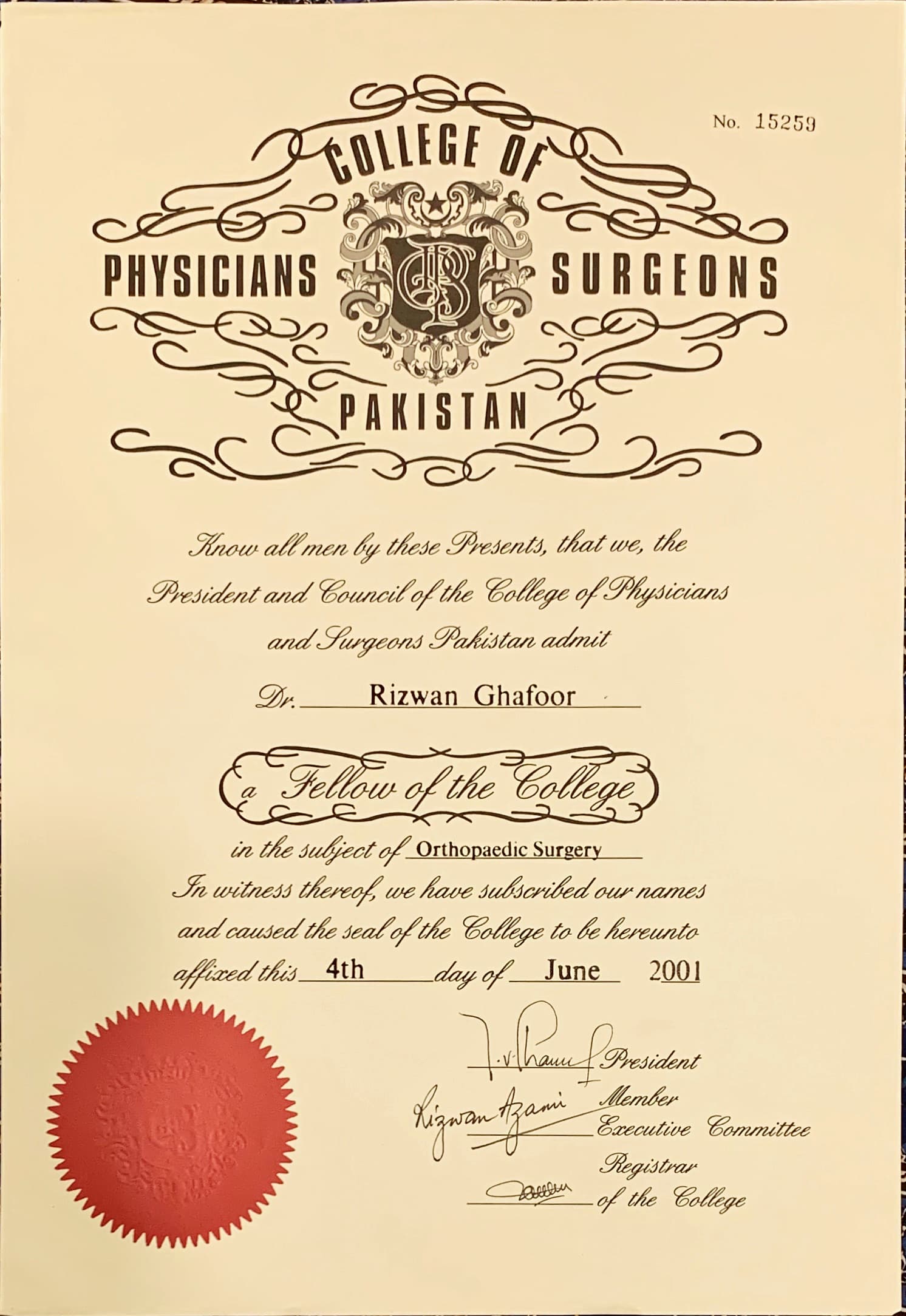
- Fellow: College of Physicians and Surgeons Pakistan
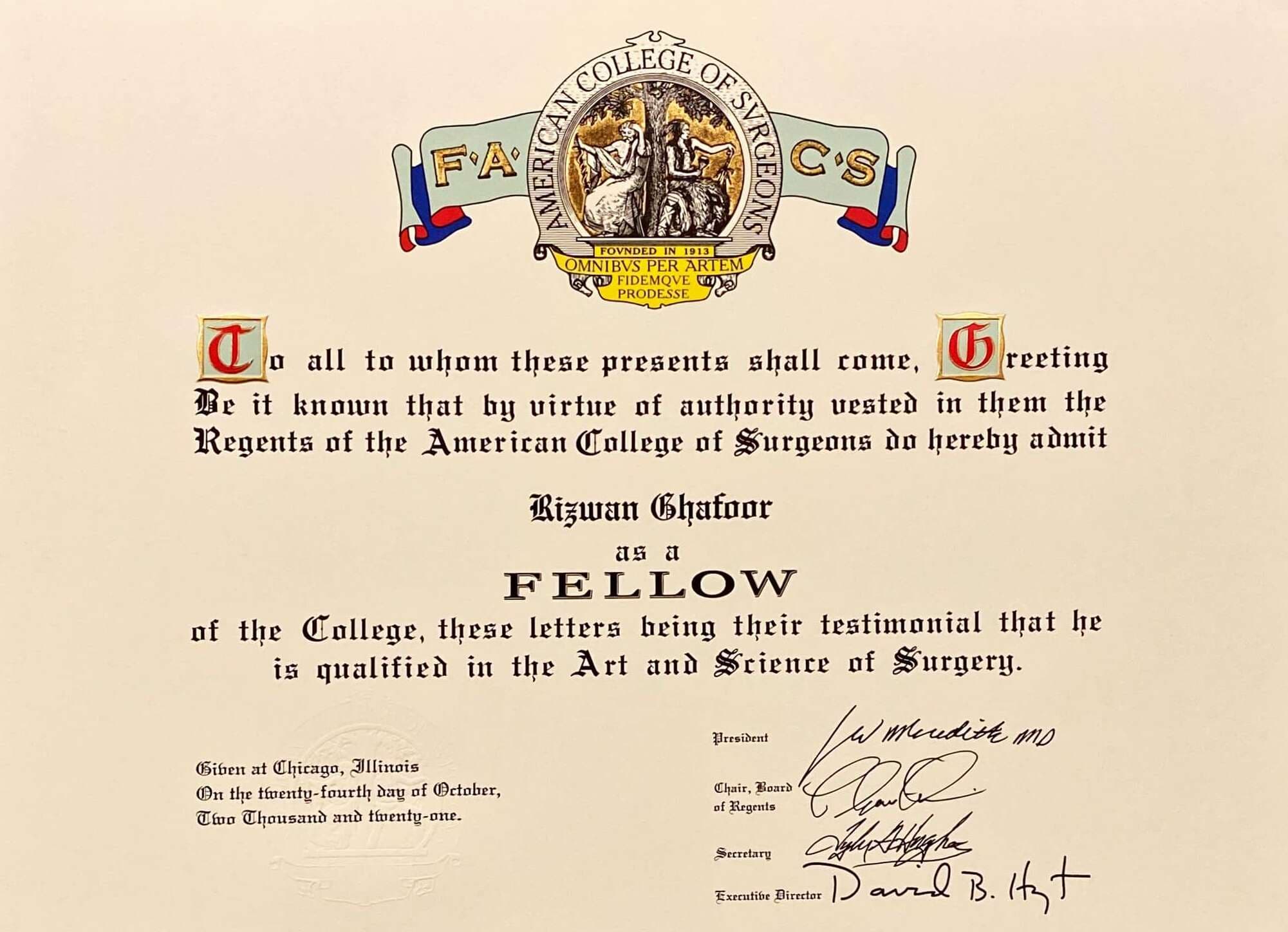
- Fellow: American College of Surgeons, USA
What this treatment addresses
- Benign bone tumours: osteochondroma, enchondroma, osteoid osteoma, fibrous dysplasia
- Simple and aneurysmal bone cysts
- Giant cell tumour of bone
- Primary malignant bone tumours such as osteosarcoma, Ewing sarcoma and chondrosarcoma
- Soft tissue lumps, lipomas and soft tissue sarcomas
- Metastatic bone disease from breast, prostate, lung, kidney or thyroid cancer
- Pathological fractures through tumour-weakened bone
- Bone lesions found incidentally on X-rays taken for another reason
- Persistent night bone pain or unexplained swelling requiring investigation
What to expect
- 01Assessment and imagingExamination of the lump or painful area, plain X-rays, and MRI or CT to define the size of the lesion, whether it has broken through the bone, and which structures lie next to it.
- 02Staging and planned biopsyInvestigations to check whether disease has spread, followed by a biopsy taken through a route chosen so that the tract can be removed with the tumour at the definitive operation.
- 03Treatment planned with oncologyOnce the tissue diagnosis is known the plan is agreed with medical and radiation oncology, since many malignant tumours are treated with chemotherapy or radiotherapy around the surgery rather than by an operation alone.
- 04Surgery and reconstructionCurettage and grafting for benign disease, or wide excision with reconstruction for malignant tumours, using an endoprosthesis, bone graft or internal fixation to restore a working limb.
- 05Surveillance after treatmentRegular clinical review and imaging afterwards, because both benign lesions such as giant cell tumour and malignant tumours can recur, and recurrence found early is far more treatable.
Recovery
Recovery depends on what the tumour turns out to be. Curettage and grafting of a benign lesion usually means protected weight-bearing for six to twelve weeks while the graft incorporates. Limb-salvage surgery with an endoprosthetic replacement involves a longer rehabilitation, typically several months of graded strengthening, and where chemotherapy forms part of treatment the overall course runs over many months. Fixation of a pathological fracture is aimed at comfort and function rather than bone union, and usually allows walking again within days.
Musculoskeletal Tumour Surgery: common questions
- Does a bone tumour mean I have cancer?
- No. Most bone lesions are benign, and many are found by chance on an X-ray taken for something else. The appearance on imaging, your age and where the lesion sits in the bone tell an experienced surgeon a great deal about how worrying it is, but the tissue diagnosis from a biopsy is what settles the question. Do not assume the worst before that point, and do not assume the best either.
- Why can the biopsy not be done at the nearest hospital?
- Because a biopsy is part of the operation, not a separate test. The needle or incision contaminates the tissue it passes through, and that tract has to be removed along with the tumour later. A biopsy placed through the wrong compartment can make limb-salvage surgery impossible. It should be planned by the surgeon who would perform the definitive procedure.
- Will I lose my limb if the tumour is malignant?
- Amputation is no longer the usual outcome. With modern imaging, chemotherapy and reconstruction the limb can be saved in the large majority of primary bone tumours. Amputation is reserved for tumours that have encased the main nerves and blood vessels, for extensive infection or recurrence, and for cases where a salvaged limb would function worse than a prosthesis.
- What symptoms should be investigated for a bone tumour?
- Bone pain that wakes you at night or continues at rest, a lump that is enlarging, a swelling that is firm and fixed to deeper tissue, a bone that breaks after a trivial injury, and bone pain with unexplained weight loss or a history of previous cancer. Any of these deserve an examination and an X-ray rather than painkillers.
- I already have cancer elsewhere and now my bone hurts. What does that mean?
- Cancer of the breast, prostate, lung, kidney or thyroid can spread to bone and weaken it to the point where it fractures under normal use. This is treatable. Stabilising the bone, sometimes before it breaks, relieves pain and keeps you walking, and it is done alongside whatever treatment your oncologist is giving for the primary disease.
Areas of expertise
- Complex trauma
- Complicated fractures
- Spinal disorders & injuries
- Sports injuries
- Joint disorders & replacements
- Hand surgeries
- Muscular problems
- Pediatric orthopaedics
- Musculoskeletal tumours
Inside the clinic
Frequently asked questions
Everything you need to know before your first visit with Dr. Rizwan Ghafoor.
Book online or call us at 0321 7327777 for booking an appointment. Consultations run Monday to Saturday, 2:00 PM to 7:00 PM, and Friday 3:30 PM to 8:30 PM, at Fatima Medical Centre, Chowk Rasheedabad, Multan.
BSc, MBBS, MRCPS(Glasg), FCPS (Tr & Orth), FACS(USA). He is a Member of the American Academy of Orthopaedic Surgeons (USA), a Member of the Pakistan Orthopaedic Association, a Member of the Royal College of Physicians and Surgeons of Glasgow, a Fellow of the College of Physicians and Surgeons Pakistan, and a Fellow of the American College of Surgeons (USA).
Complex trauma, complicated fractures, spinal disorders and injuries, sports injuries, joint disorders and replacements, hand surgeries, muscular problems, and pediatric orthopaedics.
Rs. 2,000 for consultation.
Fatima Medical Centre, Rasheed Abad, Multan.
Monday to Saturday, 2:00 PM to 7:00 PM. On Friday the clinic runs later, from 3:30 PM to 8:30 PM. The clinic is closed on Sunday.
Patients look for training, results and honest advice. Dr. Rizwan Ghafoor is a Consultant Orthopaedic Surgeon trained in Pakistan, the UK and the USA, holding FCPS (Tr & Orth), MRCPS (Glasgow) and FACS (USA), and is rated 4.9/5 across more than 140 verified patient reviews. He treats bone, joint, muscle and spine conditions at Fatima Medical Centre, Chowk Rasheedabad, Multan.
Yes. The clinic is at Fatima Medical Centre, Chowk Rasheedabad, Multan, which is within reach of most of South Punjab. If you are travelling any distance, call 0321 7327777 first to confirm your slot before you set out.
Yes. Bring your X-rays, MRI films, operation notes and discharge summary to the consultation so they can be reviewed alongside a fresh examination.
Yes. Paediatric orthopaedics is one of the eight areas of expertise, covering children's fractures, limb deformities such as bow legs and knock knees, and congenital conditions.
Visit Dr. Rizwan Ghafoor’s clinic
Book an in-person consultation online, or by phone on 0321 7327777.
- Clinic
- Fatima Medical Centre, Chowk Rasheedabad, Multan
- Timings
- Mon to Sat, 2:00 to 7:00 PMFriday, 3:30 to 8:30 PM
- Consultation fee
- Rs. 2,000